
Monoclonal antibodies (mAbs): engineered defense proteins designed to mimic the body’s natural ability to fight diseases.
mAbs have been used effectively for over 50 years to treat diseases, including cancer and autoimmune conditions. Now, new advancements are expanding their application to prevent viral diseases like COVID, RSV, and measles.
Access to mAbs is especially critical for people who need immediate protection, who cannot receive certain vaccines, or respond poorly to them.
70% fewer COVID-19 hospitalizations
In older and high-risk patients treated with mAbs
85% effectiveness against severe RSV
For high-risk infants with a single dose of mAbs
The Benefits of mAbs
Natural
Antibodies are the foundation of the human immune system, and mAbs build on our biology to create precise, rapid, and long-lasting protection.
Proven
Through rigorous clinical trial testing and validation, mAbs are shown to safely and effectively support disease prevention.
Options
While vaccines offer one form of protection, mAbs give clinicians more tools to match the right preventive option to the right person.
How mAbs Work
Monoclonal antibodies recognize and attach to specific proteins on viral cells. By binding to these targets, they can block infection before it causes illness through a natural process.
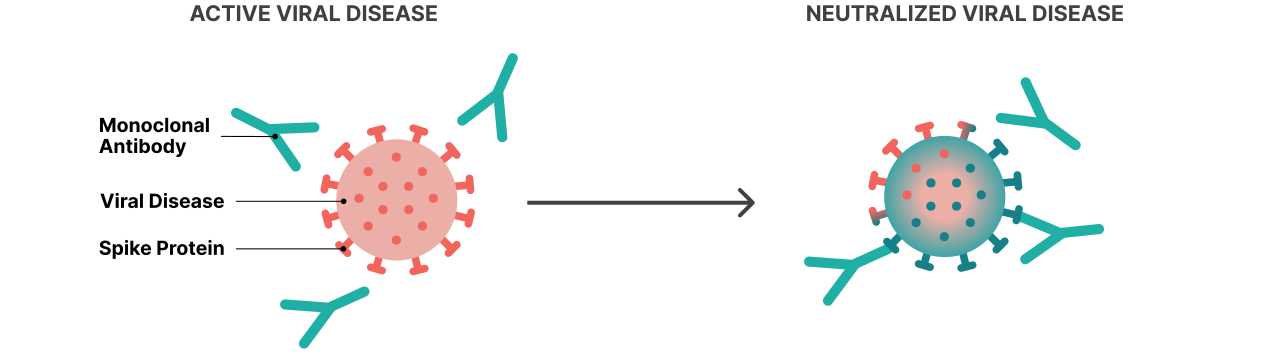
Medical illustration by Bailey Mariner
Pathways for Protection
Monoclonal antibodies mimic the body’s natural defenses through passive immunity. Having both active (i.e. vaccines) and passive options allows the body to respond more nimbly to new disease variants or pathogens.
Examples of Active Immunity
-
A person’s immune system makes antibodies after being exposed to an infection
-
A person’s immune system makes antibodies after receiving a vaccine

Examples of Passive Immunity
-
Comes from the mother, as she transmits antibodies to a baby
-
A medicine delivers antibodies to a person’s body